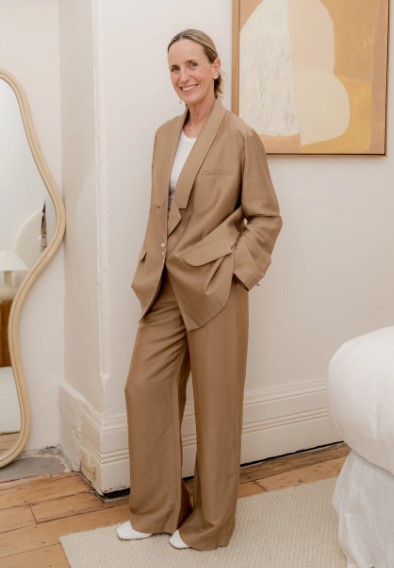
Nicole is an Australian fashion stylist, known as the ‘stylist’s stylist’.
She has worked with big names over the past 40 years including Kylie Minogue,
Miranda Kerr, INXS, Toni Collette, Naomi Watts.
FBI: You’re credited for helping transform Kylie Minogue’s image from soap star to global pop icon.
What was your creative vision behind that transformation?
Nicole: I was asked to dress her for her Japanese record label album cover and accompanying press and knew nothing of her,
did not watch Neighbours and had maybe heard one song or seen a video. When I met her I was taken by how beautiful
she was and that although small, her proportions were good and I know that her beauty and fame could wear anything and
we could really move the fashion needle with her in the newer trends. She was happy to go along with it and we decided to
progress her style along with her personal growth and her notoriety and music so moved her from bubblegum pop to
sophisticated and sexually awakening woman.
FBI: How has the role of a stylist changed since you first started?
Nicole: There was no such thing as a stylist. You either worked in the fashion department of a magazine or
you worked in film (known as Wardrobe). There was nothing else. I started as fashion assistant at Vogue
(which I got into by annoying them so much I think they had to give me a job).
There was Vogue, Cleo, Cosmo and Mode. That was it.
FBI: What city in the world do you think offers the greatest creative inspiration and why?
Nicole: Fashion is more global now so it’s hard to say one is better than another.
You have to be on your fashion game in Paris I think. The pressure is on there to be as on point as you can.
NO sloppy choices (like people get away with in Sydney). It doesn’t mean you need to spend a lot of money,
just to be either polished and chic or slightly inventive (in a considered way). People in Paris are surrounded by
stylish people so it culturally rubs off.
FBI: What’s one piece of advice that has stayed with you throughout your career?
Nicole: Work as hard as you can late into the night and weekends if need be, always be positive and
willing and have a ‘can do’ attitude. Listen and watch. You don’t know everything, learn from those who do.
Watch old films, visit art galleries, think of unusual ways to wear ordinary things. That’s more than one piece of advice!
I guess the first is to work hard. The interns I remember and who went on to work in the industry were the ones who offered
their help often and were happy to do anything, even the lowly tasks, just to be in the room.